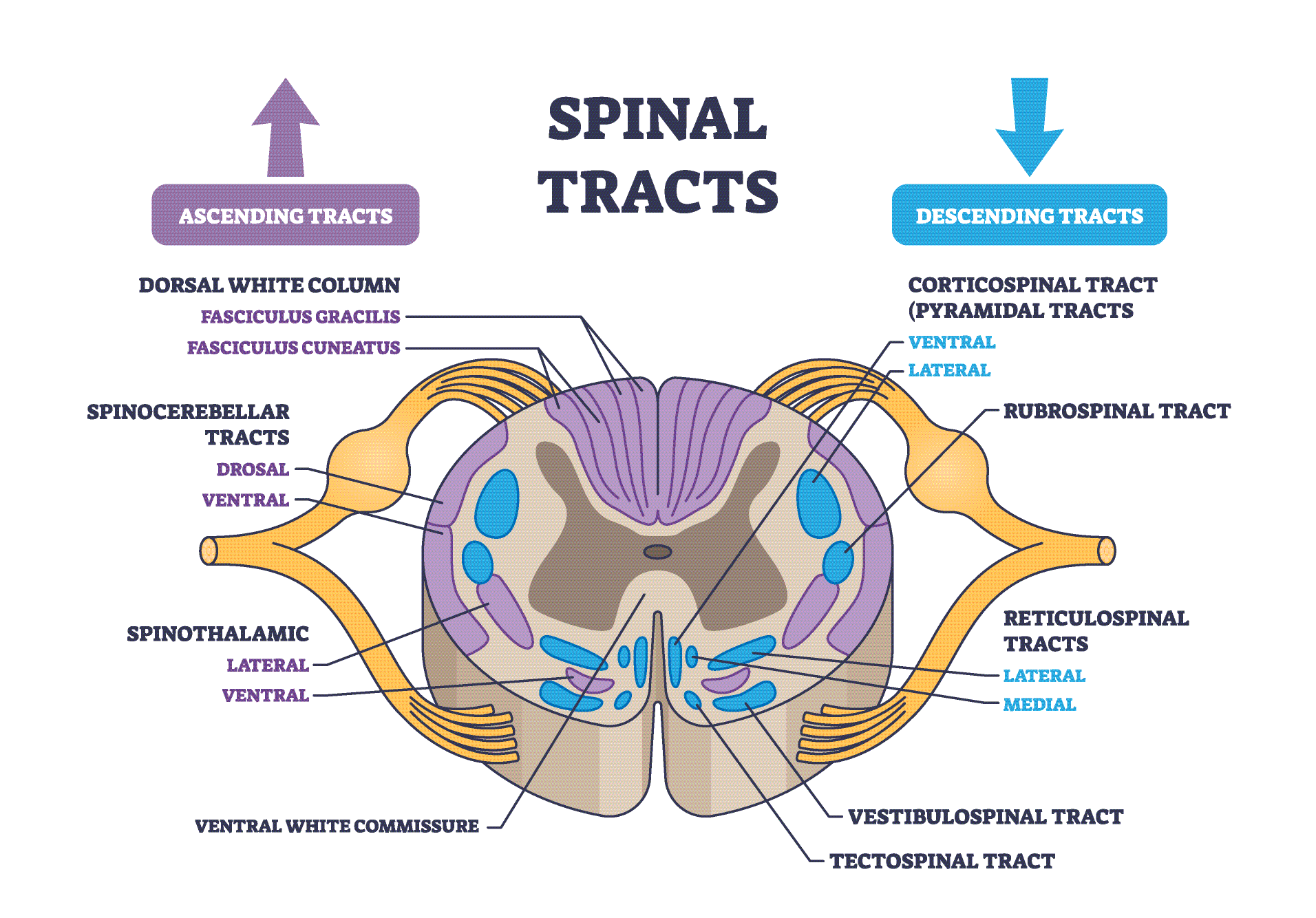
Learning that you may have a spinal cord tumor can be frightening. You deserve a clear explanation of what it means, whether treatment is needed and who has the experience to help. Not every spinal tumor is inside the cordSome tumors grow around the spinal cord. Others grow within the cord itself; doctors call these intramedullary tumors. These rare tumors require particularly careful planning because the cord carries messages between your brain and body. A small space with an enormous jobThe spinal cord is roughly finger-width, depending on where it is measured. Within that small space are pathways that support movement and feeling. Surgery inside it calls for precise techniques, specialized experience and careful decisions about how much tumor can safely be removed. One small cord. Many vital pathways.
This cross-section shows how many nerve pathways fit into the spinal cord. Sensory pathways carry information toward the brain, while movement pathways carry signals down from the brain. Their close arrangement helps explain why surgery within the cord requires such precision. Seeing the cord during surgery
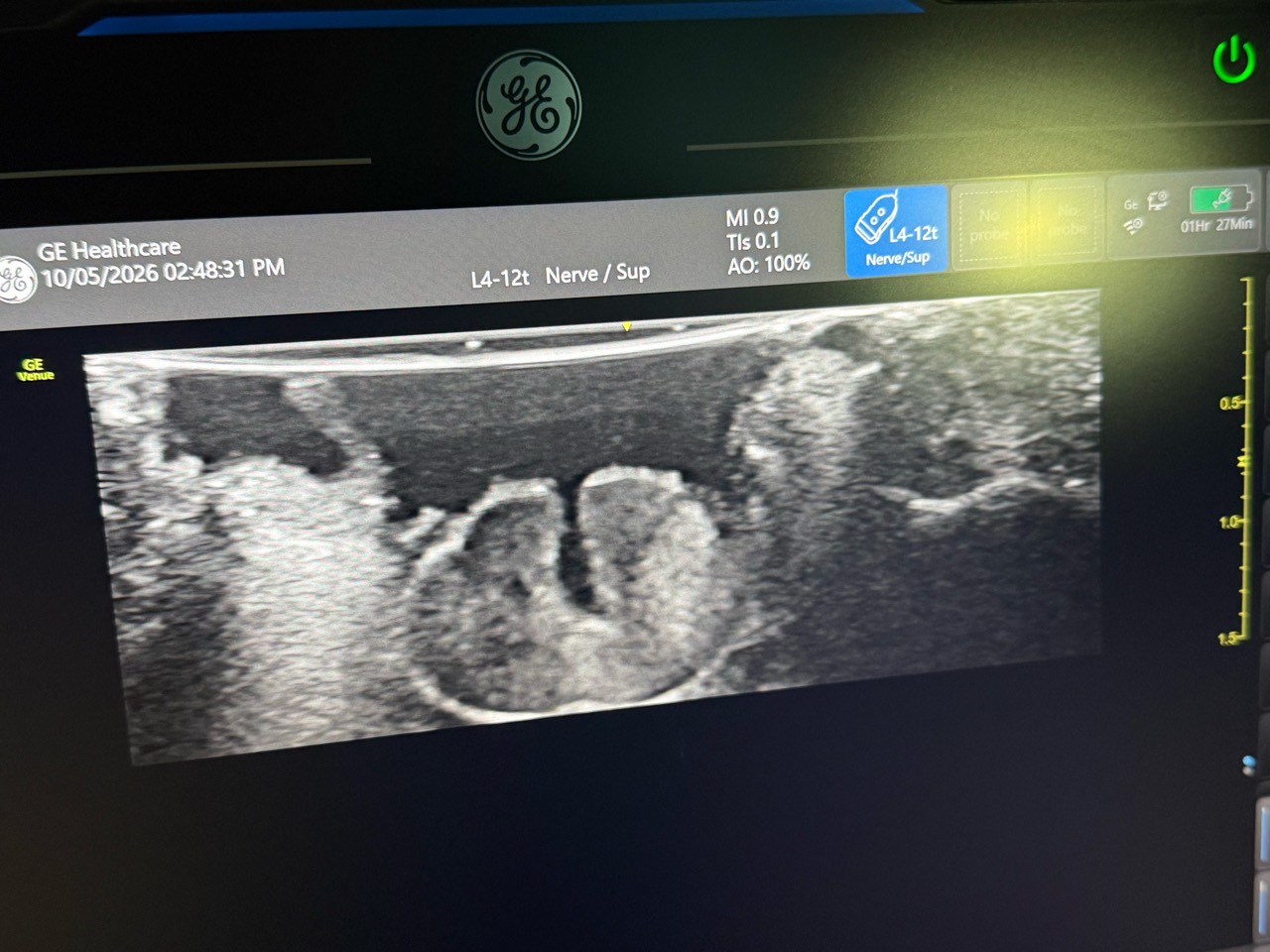
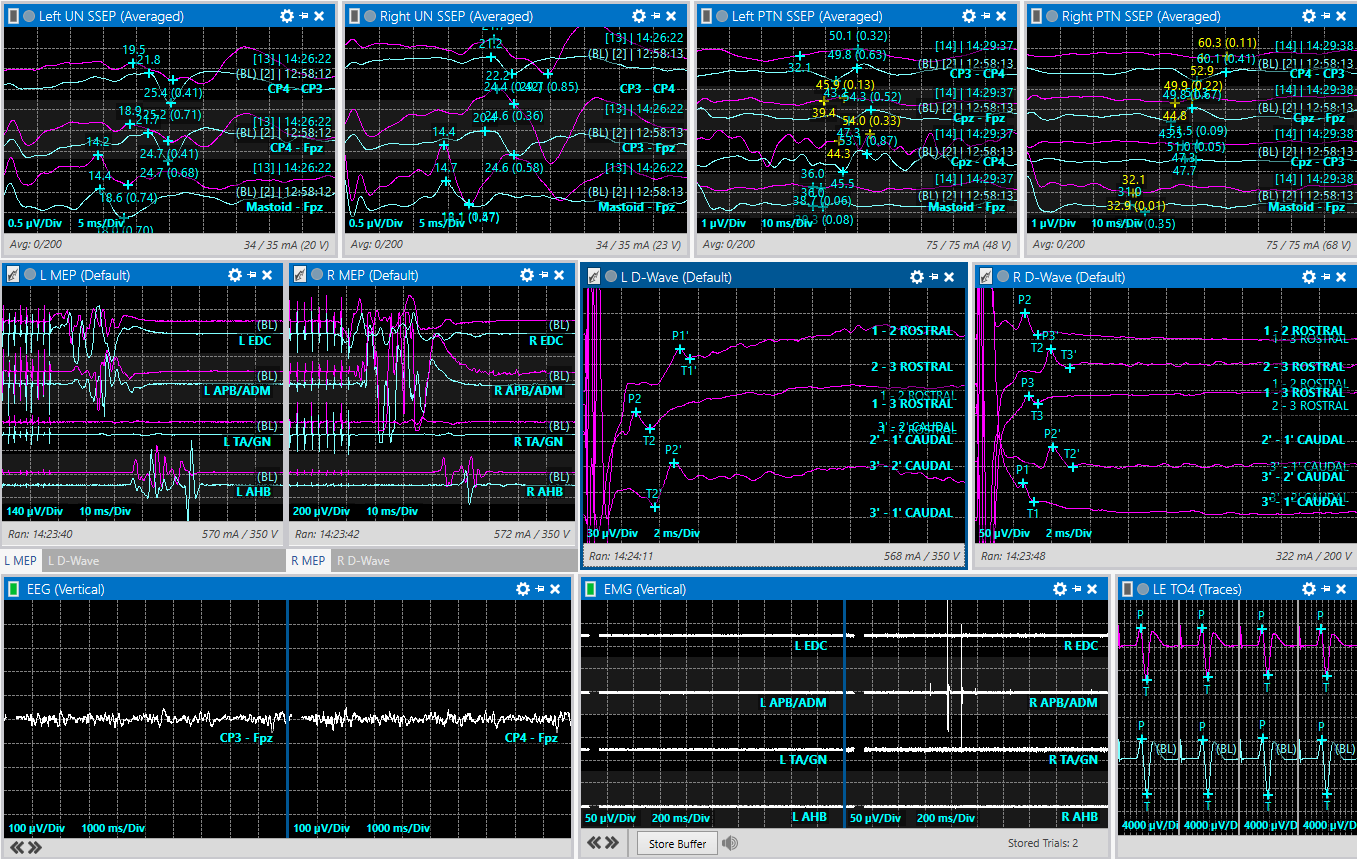
Ultrasound can help the surgeon see the spinal cord and locate the area being treated during the operation. Listening to the pathways that control movementDuring surgery, the monitoring team checks electrical signals traveling through the nervous system. One type, called a D-wave, helps assess important pathways that carry movement signals. Above the tumor: a recording can provide a reference signal. Below the tumor: another recording helps the team check whether the signal is traveling through the area being treated. When suitable for the operation, these recordings work with other monitoring methods. Changes can alert the team to pause and reassess. Not every patient or tumor allows the same recordings. 
The lines on this screen represent electrical responses recorded during surgery. The D-wave panels include recordings above and below the area being treated. Together with other monitoring signals, they help the team follow how important nerve pathways are functioning. Protection is the goal, not a promiseMonitoring gives the surgeon valuable information, but it cannot guarantee that strength or sensation will remain unchanged. Weakness can occur after surgery, sometimes temporarily and sometimes permanently. Your individual risks depend on the tumor, its location and your health before surgery. Questions worth asking- Is my tumor inside the spinal cord or around it?
- What experience do you have with this type of tumor?
- What are my options, including observation when appropriate?
- Which monitoring methods are suitable for me?
- What changes in movement or sensation are possible, and what might recovery involve?
Make room for a careful conversationBring your questions to a neurosurgeon experienced in spinal cord tumors. Understanding the choices, benefits and risks is an important part of deciding what comes next. |